
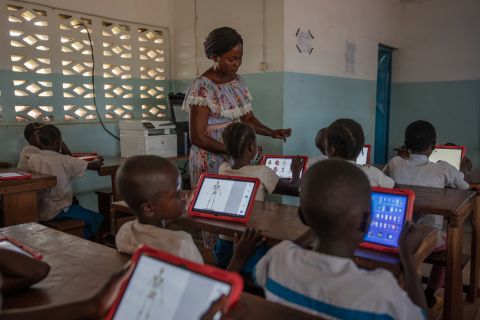
The Teaching for Life training programme, developed by Vodafone Foundation, the UN Refugee Agency (UNHCR) and Digital Awareness UK, was designed to support teachers in Instant Network Schools (INS) to develop and apply learner-centred pedagogies, make effective use of INS technology and support life skills education.
An evaluation led by Dr Emily Setty at the University of Surrey followed INS teachers in South Sudan, Kenya and the Democratic Republic of the Congo before and after Beginner-level training, and after they returned to school.
The findings show clear progress across the three countries: countries: stronger pedagogical knowledge, greater confidence and competence, reported changes in classroom practice, perceived changes
among students and wider sharing with colleagues.
However, it is clear that training alone cannot transform teaching. The evaluation is equally clear about the barriers teachers face, including large classes, limited time and space, insufficient resources, infrastructure constraints and diverse learning needs. Teachers also need continued professional learning, practical resources, peer support and classroom conditions that help them put learning into practice.
The wider lesson is simple. Teachers in crisis and displacement settings are experienced professionals with knowledge and agency. Effective professional learning builds on those strengths and helps teachers adapt evidence-informed approaches to their own context and create opportunities for learning to spread through peer networks.
As technology changes education, strengthening teachers is one of the most important ways we can strengthen quality education for all, including refugees and forcibly displaced learners.
Image credit: UNHCR/Guerchom Ndebo
More stories
Standing with teachers: what Teaching for Life tells us about professional learning
4 minute read