

As part of our partnership with Save the Children, Vodafone Foundation has released new research exploring how young people across Europe perceive their own digital wellbeing and the role digital spaces play in their daily lives.
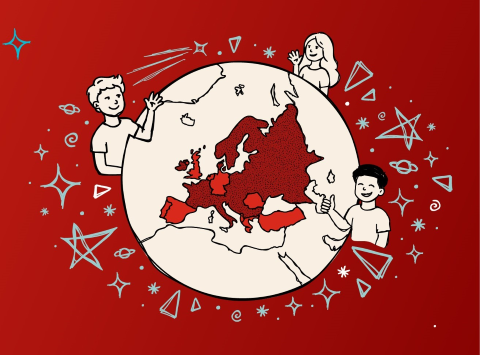
Connected Childhood: The State of Digital Wellbeing & Resilience for Children and Young People in Europe surveyed over 7,500 13–18-year-olds across nine European countries using a new Digital Wellbeing and Resilience Index. It presents a mixed snapshot of digital wellbeing and resilience amongst young Europeans in Albania, Greece, Germany, the Netherlands, Portugal, Romania, Spain, Türkiye and the United Kingdom
The findings reveal a striking gap between the pace of technological change and the digital literacy skills of young people. Almost half report that they do not feel confident in their level of digital literacy, highlighting an urgent need for greater support and education.
The research also shows growing concerns about the amount of time young people spend on social media and the risks they may encounter there. Yet, despite these challenges, two thirds of young people say they feel able to express themselves authentically online and manage their relationships safely.
Three in ten young people (30%) report frequent stress from being online, and nearly half (45%) worry about missing out when offline. This highlights emerging pressures that may affect wellbeing over time.
As a result of these findings, we are calling for online platforms to make their services safer by design, including implementing more effective content moderation for underage children, preventing addictive features, and enforcing strong anti-exploitation measures.
Children's version
This version of the report has been especially designed for children. It contains all the key information in an easy-to-read format. Use it to start a conversation about digital wellbeing with any young people in your life.
Our partnership with Save the Children
Our partnership with Save the Children is designed to ensure that all children, no matter their background, have the tools and confidence to safely navigate and thrive in our increasingly connected world.
We do this through our Skills Upload Jr digital wellbeing programme, designed with and for children, helping them to navigate online spaces safely, confidently and responsibly.Taking a future-focused approach, the programme equips educators to teach relevant digital life skills in security, privacy, identity, literacy and empathy – so children can embrace the latest developments in their digital lives.