

By Justin Waller, Director of Instant Network Emergency Response
As I write this, my phone is flashing with messages from Instant Network Emergency Response (INER) teams.
INER volunteers are leading emergency response efforts simultaneously in Mozambique and Portugal. Both countries have been hit hard with unrelenting storms and floods claiming lives, destroying homes, washing away infrastructure, and severing the most basic lifeline in any crisis: the ability to communicate.
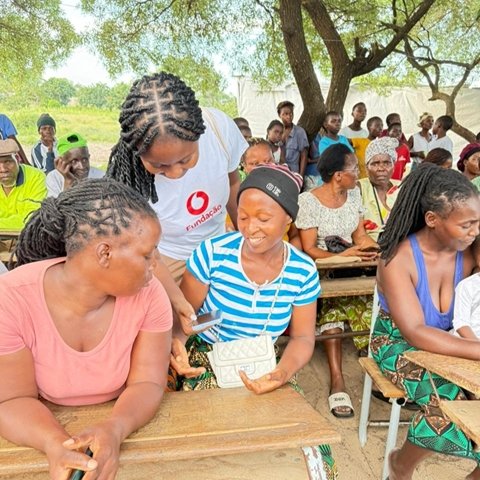
Over 700,000 people have been affected in Mozambique alone, around half of them are children, and thousands are seeking refuge in temporary shelters. The INER team have already established free wifi and charging stations at four schools that are sheltering over 4000 people between them. And they are continuing to identify more sites that desperately need to be reconnected.
Meanwhile, in Portugal, local INER volunteers have already responded to storm Kristin. At least three people have been killed, and over 800,000 residents of central and northern Portugal were without electricity on Wednesday, before the storm moved inland to Spain. Sites have already been reconnected, and an international team of INER volunteers are on their way to supplement the local response with additional kit.
Local and international
It's this blend of local and international response that is so effective.
INER is well known for deploying in times of emergency. Teams of highly trained volunteers can be in emergency areas, usually within 48 hours. We fly teams in, often across continents, carrying equipment through airports, negotiating access, and racing against the clock. That will always be a vital part of our response.
We are always looking for ways to improve our response, which is why we are building on our experience and establishing a network of local INER hubs. These hubs will be run by local teams to build resilience, and enable faster, more effective and more efficient responses that are led by local communities.
Local hubs also have the advantage of being grounded in better awareness of context, with a stronger understanding of terrains, communities, barriers and processes than international teams could hope for. They also have a smaller environmental footprint and, perhaps most importantly, when responses are led locally, communities become more resilient, better prepared and more confident in their ability to act.
These hubs are already up and running in Czech Republic and Ireland. Underscoring how vital this work is, we had scheduled the establishment of local hubs in Mozambique and Portugal, and we are now accelerating this work. Further hubs will be established in Albania, Democratic Republic of the Congo and Egypt.
Every hour counts
As I coordinate updates from both Mozambique and Portugal, I feel the weight of the moment. These aren’t theoretical exercises or long term strategy discussion. They are unfolding in real time, amid loss, uncertainty and destruction. Every hour counts.
For me, resilience isn’t an abstract concept. It’s seeing local INER volunteers gain the skills to set up emergency networks in hours, not days. It’s standing back and watching a local team run a deployment without waiting for us to arrive. It’s knowing that the people best placed to help their neighbours now have the tools to do it.
International INER team will still be there for the big emergencies. And, as we see in Portugal, our network of volunteers will always be able to lend extra support when needed. But increasingly, the most powerful thing we can do is step back, and enable local INER responders to take the lead.
As the storms continue across both Mozambique and Portugal, and as teams work tirelessly on the ground, that belief has never felt more important or more urgent.